
WELCOME BONUS 300%
UP TO €2000 + 100
FREE SPINS
UP TO €2000 + 100
FREE SPINS
Home → Roulette
Roulette at Up X
Too High a Bet for a 50 EUR Bankroll
A player starting with a 50 EUR bankroll might find certain live roulette tables challenging. For instance, Quantum Roulette Live from Playtech allows bets from 0.10 EUR up to 5,000 EUR, presenting a wide range of possibilities. A single bet on a straight number, paying 35:1, would consume a significant portion of a small bankroll. This means a 50 EUR balance could be depleted very quickly with just a few unsuccessful wagers.
The house edge on European Roulette variants, which includes Quantum Roulette Live, is typically 2.70%. This persistent advantage means that over time, the casino expects to retain 2.70% of all wagers placed. When playing with a limited bankroll of 50 EUR, even smaller bets can quickly erode the funds due to this inherent mathematical edge. For example, a 10 EUR bet, if lost, represents 20% of the entire starting capital.
For beginners with a 50 EUR bankroll, it is advisable to select tables with lower minimum bet requirements. While Blaze Roulette from Authentic Gaming offers a minimum bet of 0.20 EUR, the potential for rapid losses remains if strategic betting is not employed. The payout structure, where a straight bet pays 35:1, means a single winning bet could significantly boost the bankroll, but multiple losses can be detrimental.
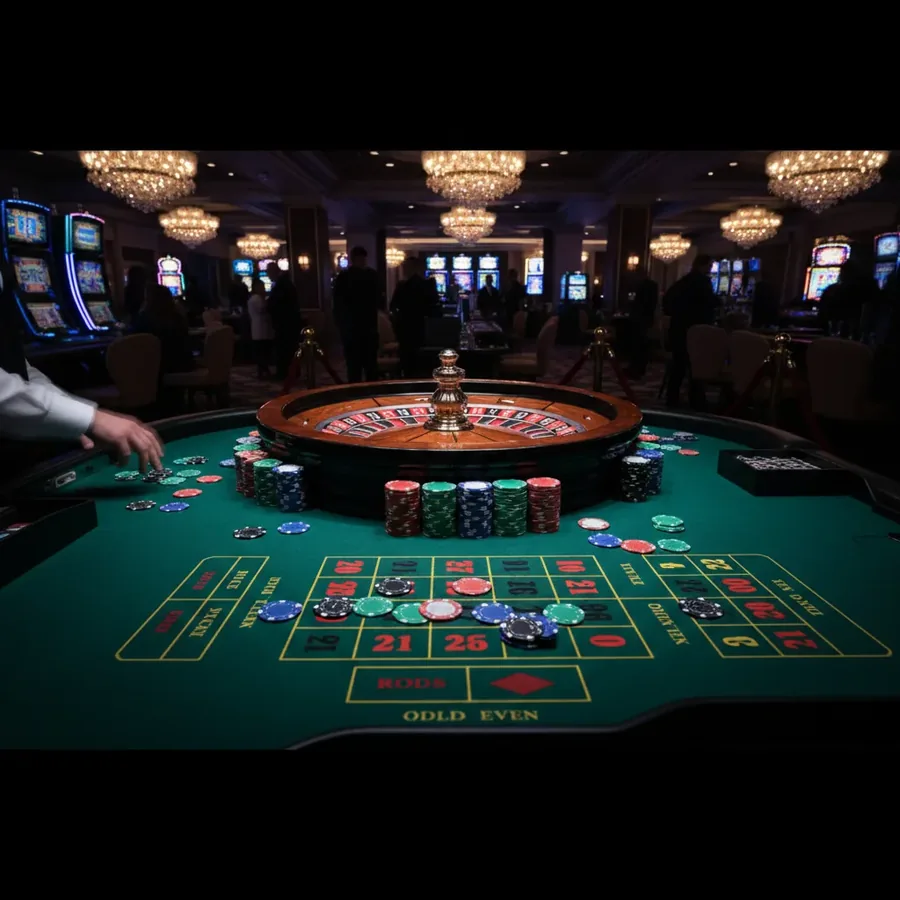
What Outside Bets with 1:1 Actually Pay
Outside bets such as Red/Black, Odd/Even, and 1-18/19-36 on European Roulette variants typically offer a 1:1 payout. This means a winning bet of 10 EUR would return 20 EUR, with the original stake included. These bets cover a significant portion of the wheel, with 18 numbers falling into each category out of the 37 sectors. For example, betting on Red would win if any of the 18 red numbers appear.
On European Roulette, the RTP is 97.30%, resulting in a house edge of 2.70%. Even with the seemingly favourable 1:1 payouts on outside bets, this house edge applies. This means for every 100 EUR wagered on these bets, the casino expects to keep 2.70 EUR in the long run. Understanding this constant edge is crucial for managing expectations, even when betting on even chances.
French Roulette with the La Partage rule significantly alters the payout for even chances when a zero appears. Instead of losing the entire stake, half of the bet is returned to the player. This effectively reduces the house edge on these specific bets to 1.35%, making it a more favourable option. For instance, a 10 EUR bet on Red would result in a 5 EUR refund if the ball lands on zero.
50 Euro Budget at a 1 Euro Table
A 50 EUR budget at a roulette table with a 1 EUR minimum bet provides a reasonable starting point for new players. This allows for up to 50 individual bets before the bankroll is exhausted, assuming no wins. Games like Auto Roulette Classic 1 Live, with a minimum bet of 0.10 EUR, would offer even more spins for the same budget. For example, 0.10 EUR bets would permit 500 individual wagers.
The house edge for standard European Roulette is 2.70%, meaning that on average, 2.70% of all stakes are retained by the casino. With a 50 EUR bankroll and 1 EUR bets, this edge will gradually reduce the funds over time. For example, after 50 losing bets of 1 EUR each, the bankroll would be zero, with the casino having retained the stakes. This does not account for any winning bets.
When considering a 50 EUR budget, playing on a European wheel with its 2.70% house edge is generally more favourable than an American wheel's 5.26% edge. The American variant includes a double zero (00), increasing the total sectors to 38. For instance, a 1 EUR bet on a straight number on an American wheel has a higher statistical probability of loss compared to the same bet on a European wheel.
Even Chances 1:1 on 18 Numbers
Bets on even chances like Red/Black, Odd/Even, or High/Low cover 18 numbers each on a standard European Roulette wheel. These bets typically pay 1:1, meaning a 10 EUR winning bet returns 20 EUR (10 EUR profit plus the original 10 EUR stake). The game offers 37 sectors in total, with numbers 1 through 36 plus a single zero (0). Therefore, a 1:1 payout is applied to bets that correctly predict one of these two large groups.
The RTP for European Roulette is 97.30%, which translates to a house edge of 2.70%. This edge applies to all bets, including the 1:1 paying even chances. For example, if 100 EUR is wagered across multiple bets on even chances, the casino can expect to retain approximately 2.70 EUR over the long term. This figure represents the mathematical advantage the casino holds.
French Roulette with the La Partage rule offers a significant advantage on even chance bets. When the ball lands on the single zero, only half of the bet on an even chance is lost, with the other half returned. This rule effectively halves the house edge on these specific bets to 1.35%, making it a more player-friendly option. For example, a 10 EUR bet on Red would only result in a 5 EUR loss if zero is the outcome.
D'Alembert and Fibonacci Against the Same Table Limit
The D'Alembert system involves increasing the bet by one unit after a loss and decreasing it by one unit after a win. For example, if a player bets 1 EUR on Red and loses, the next bet would be 2 EUR. If they then win, the subsequent bet reverts to 1 EUR. This progressive betting strategy aims to capitalize on streaks of wins or losses. However, it is still subject to the overall table limits.
The Fibonacci sequence system follows a similar progressive pattern, where the bet amount increases after a loss by following the sequence (1, 1, 2, 3, 5, 8...). For example, after a 1 EUR loss, the next bet would be 1 EUR, followed by 2 EUR, then 3 EUR, and so on. This system is also constrained by the maximum bet limits imposed by the casino, such as those found on tables like Blaze Roulette or Auto Roulette Classic 1 Live.
Both the D'Alembert and Fibonacci betting systems are susceptible to the table limits found on online roulette games. For instance, if a player on Auto Roulette Classic 1 Live (which has a maximum bet of 2,000 EUR) experiences a long losing streak, their bet progression could quickly reach the table's maximum. At this point, the system can no longer be effectively applied, and further losses would be capped by the limit.
Roulette bet types at a glance
| Bet | Payout | Win Chance | Numbers Covered | House Edge |
|---|---|---|---|---|
| Roulette Amerikanisch – Five Number Bet (0, 00, 1, 2, 3) | Five Number 6:1 (deckt 5 von 38 Sektoren) | 92.11% | Einzige Wette am amerikanischen Rad mit Edge über 5,26% – „Fallenwette“. Kein Äquivalent am europäischen Rad | 7.89% |
| Roulette Französisch mit La Partage (gerade Chancen) | Rot/Schwarz 1:1 (bei 0 Rückerstattung 50%), Odd/Even 1:1, Low/High 1:1; Innere Einsätze ohne La Partage: Straight 35:1, Split 17:1, Street 11:1, Corner 8:1 | 98.65% | Bei 0 wird die Hälfte des Einsatzes auf gerade Chancen zurückerstattet (Rot/Schwarz, Pair/Impair, Manque/Passe). En Prison gibt denselben 1,35%. Regel gilt NUR für gleiche Einsätze | 1.35% |
| Roulette Europäisch (einfache Null, 37 Sektoren) | Straight 35:1, Split 17:1, Street 11:1, Corner 8:1, Six Line 5:1, Dozen 2:1, Column 2:1, Rot/Schwarz 1:1, Odd/Even 1:1, 1-18/19-36 1:1 | 97.30% | 37 Sektoren (1–36 + 0); Auszahlungen wie für 36 Sektoren – daher konstanter Edge auf ALLE Wetten | 2.70% |
| Roulette Amerikanisch (doppelte Null, 38 Sektoren) | Straight 35:1, Split 17:1, Street 11:1, Corner 8:1, Six Line 5:1, Dozen 2:1, Column 2:1, Rot/Schwarz 1:1 | 94.74% | 38 Sektoren (1–36 + 0 + 00); Auszahlungen wie beim europäischen Rad, aber der zusätzliche Sektor verdoppelt den Hausvorteil | 5.26% |
| Roulette Französisch, innere Einsätze (La Partage gilt nicht) | Straight 35:1, Split 17:1, Street 11:1, Corner 8:1, Six Line 5:1, Dozen 2:1, Column 2:1 | 97.30% | Rad gleich (37 Sektoren), aber La Partage/En Prison gilt nicht für innere Einsätze – Edge bleibt europäisch | 2.70% |
Split 17:1 and Street 11:1 Explained
A Split bet, covering two adjacent numbers on the roulette layout, pays 17:1. For example, betting on 5 and 8 would yield 17 times your stake if either number hits. This type of bet is available on European and American wheels, but the house edge differs significantly due to the presence of the double zero on the latter.
The Street bet, covering a row of three numbers, offers a payout of 11:1. If you bet on 1, 2, 3 and the ball lands on any of these, you receive 11 times your wager. While the payout remains constant, the house advantage is higher on an American wheel (5.26%) compared to a European wheel (2.70%).
When considering the house edge, a Split bet on an American wheel has an effective RTP of 94.74%, while on a European wheel, it is 97.30%. Similarly, a Street bet carries the same RTP values for the respective wheel types. Understanding these differences is crucial for managing your bankroll effectively over the long term.
100 Euro Bankroll: 100 Rounds Simple Chances
With a 100 Euro bankroll, playing 100 rounds on simple chances like Red/Black at a European Roulette table, where the RTP is 97.30%, is feasible. This bet pays 1:1, meaning a 1 Euro bet returns 2 Euros if successful. The house edge on this bet is 2.70%, leading to a theoretical loss of 2.70 Euros over 100 such bets.
If you were to place a 1 Euro bet on simple chances for 100 rounds, your total wager would be 100 Euros. Given the 2.70% house edge on European Roulette, you might expect to have approximately 97.30 Euros remaining on average. This is because for every 100 Euros wagered on simple chances, the house expects to retain 2.70 Euros.
However, playing French Roulette with the La Partage rule can significantly alter this outcome for even-money bets. With a 1.35% house edge, a 100 Euro bankroll could theoretically sustain more rounds, with an average remaining balance closer to 98.65 Euros after 100 bets on Red/Black, Pair/Impair, or Manque/Passe.
How Long is a Betting Phase at a Live Table?
At Blaze Roulette, provided by Authentic Gaming, the betting phase is determined by the live dealer and the game's flow. While specific durations are not fixed, a typical round at a live roulette table allows players ample time to place their bets. The game proceeds at a pace set by the croupier and the automated wheel.
For Auto Roulette Classic 1, also from Authentic Gaming, the betting phase is automated and designed for speed. With an RTP of 97.30%, these tables aim to offer more spins within a given timeframe. The time to place bets is generally shorter than at a live dealer table, allowing for quicker gameplay.
Quantum Roulette Live, a Playtech offering, features quantum multipliers that can enhance payouts on specific numbers. The betting phase here is managed by a live dealer, similar to Blaze Roulette, with time allocated for players to make their wagers before the ball is spun. The game operates with 37 sectors, and bets can range from 0.10 EUR to 5,000 EUR.
Even Chances vs Straight: Variance Comparison
Even chances, such as Red/Black or Odd/Even, offer payouts of 1:1 and are characterized by low variance. On a European Roulette wheel with an RTP of 97.30%, these bets are more frequent, leading to smaller, steadier wins and losses over time. The house edge on these bets is 2.70%.
In contrast, a Straight bet, covering a single number, pays 35:1 and exhibits high variance. While the payout is significantly higher, wins are much rarer. This means a player could experience long losing streaks followed by a substantial win, making it a more volatile betting choice compared to even chances.
For instance, betting 10 Euros on Red (even chance) and winning would return 20 Euros (10 Euro profit). Betting 10 Euros on a single number (Straight) and winning would return 360 Euros (350 Euro profit). However, the probability of hitting Red is approximately 48.65%, while the probability of hitting a single number is approximately 2.70% on a European wheel.
Distribute 500 Euro Bankroll at the Lightning Table
At a live Lightning Roulette table, which features quantum multipliers up to 500x on 1-5 numbers, a 500 Euro bankroll can be distributed across various bet types. For example, a player could allocate 100 Euros to Straight bets on numbers that might be selected for multipliers. These bets have a 35:1 payout, but the overall RTP is 97.30% due to the multipliers.
Alternatively, a portion of the 500 Euro bankroll could be placed on even chances like Red or Black, which pay 1:1, with a 1 Euro minimum bet. While these bets offer lower payouts, they are more frequent, providing more sustained gameplay. The house edge on even chances on a 37-sector wheel is 2.70%.
Considering the potential for amplified wins on specific numbers due to quantum multipliers, a strategy might involve placing smaller bets on the Straight bets that could benefit, while using the remaining bankroll for more consistent even-chance bets to prolong play. For example, 250 Euros on even chances and 250 Euros split across potential multiplier numbers.
Which Bets Count Towards 10 Percent?
Table games at Up X, including roulette, contribute only 10 percent towards the wagering requirements of bonuses. This means that for every €100 wagered on a table game, only €10 is counted towards clearing the bonus. For example, a €300 welcome bonus with a 40x wagering requirement would necessitate €12,000 in total wagers if only table games were played. This calculation highlights the impact of the 10 percent contribution rate.
Roulette variants such as European Roulette, which has an RTP of 97.30% and a house edge of 2.70%, fall under this 10 percent rule. Similarly, American Roulette, with its higher house edge of 5.26% due to the double zero, also contributes only 10 percent. Even French Roulette, with its potentially lower house edge of 1.35% on even chance bets when La Partage is active, is subject to the same 10 percent wagering contribution.
Live dealer games like Quantum Roulette Live and Blaze Roulette, both featuring an RTP of 97.30%, also have their stakes counted at 10 percent for bonus wagering. Auto Roulette Classic 1 Live, also with an RTP of 97.30%, is no exception. This policy applies across all listed live roulette titles, regardless of their specific betting limits or provider, such as Playtech or Authentic Gaming.
Only 10 Percent Contribution: What are the Consequences?
A 10 percent contribution rate for table games like roulette significantly extends the time and amount of wagering needed to clear bonus funds. For instance, to meet a wagering requirement of €12,000 (calculated from a €300 bonus at 40x), a player would need to wager €120,000 in total if only playing roulette. This is substantially more than if playing slots, which typically contribute 100%.
This lower contribution means that players who primarily enjoy roulette will find it much harder to unlock their bonus winnings. A €2,000 welcome bonus, for example, with a 40x wagering requirement, would necessitate a total of €80,000 in wagers. If playing only roulette, this translates to needing to bet €800,000 due to the 10 percent contribution, a considerable sum for any player.
The consequence for a beginner is that the bonus funds might become effectively inaccessible for withdrawal if their play is concentrated on roulette. While roulette offers strategic depth, the 10 percent contribution severely impacts the speed at which bonus terms are met, potentially leading to frustration if not understood before accepting the offer.
Table Limit 500 Euro Stops Every Doubling
The €5,000 maximum bet limit on live roulette tables, such as Quantum Roulette Live and Blaze Roulette, presents a practical constraint, especially for strategies involving progressive doubling. While a player might aim to double their bet after each loss to recover previous stakes, reaching the €5,000 cap halts this progression. For example, after several successful doublings, a bet could approach €5,000, leaving no room for further increases.
Consider a scenario where a player uses a doubling strategy on European Roulette. Starting with a €0.10 bet, subsequent bets could be €0.20, €0.40, €0.80, €1.60, €3.20, €6.40, €12.80, €25.60, €51.20, €102.40, €204.80, €409.60, €819.20, €1638.40, €3276.80. The next doubling would be €6553.60, exceeding the €5,000 limit, thus preventing the strategy from continuing.
This table limit of €5,000 at live roulette means that strategies relying on escalating bets to recoup losses are inherently capped. While the base RTP of 97.30% for European and French roulette remains, the ability to implement certain betting progressions is curtailed once bets approach this upper threshold, affecting a player's betting flexibility.
European or American: Which Wheel Pays Better
For players seeking better odds, the European Roulette wheel is generally more advantageous than its American counterpart. European Roulette features a single zero (0) and 37 sectors, resulting in a house edge of 2.70% and an RTP of 97.30%. This means that, over the long run, players can expect to retain 97.30% of their wagers.
American Roulette, conversely, includes both a single zero (0) and a double zero (00), expanding the number of sectors to 38. This additional sector increases the house edge to 5.26%, lowering the RTP to 94.74%. An example of this is the Five Number Bet on American Roulette, which has a significantly higher house edge of 7.89%.
Therefore, when choosing between the two, a European or French wheel offers a more favorable return. For instance, a straight-up bet on a single number in European Roulette has a 35:1 payout and a 2.70% house edge, whereas the same bet in American Roulette, despite the same 35:1 payout, carries a much higher risk due to the 5.26% house edge.
Statistics: 2.70 Percent of Every Bet
The house edge on European Roulette stands at 2.70 percent, a statistical advantage for the casino. This means that for every €100 wagered on a European wheel, the casino mathematically expects to retain €2.70 over an extended period. This figure is derived from the 37 sectors on the wheel, including the single zero.
This 2.70% house edge applies uniformly across all standard bets on European Roulette, whether it's a straight bet at 35:1, a split bet at 17:1, or an even-money bet at 1:1. For example, an even-money bet like Red or Black, which pays 1:1, still carries the 2.70% disadvantage for the player when the zero comes up.
Understanding this 2.70% figure is crucial for new players, as it represents the theoretical loss rate. While individual sessions can vary greatly due to luck, this statistic highlights the long-term profitability for the casino and the inherent disadvantage players face on this particular roulette variant.
Contact
Live - online chat
Banking









Providers












UP-X Casino 2026